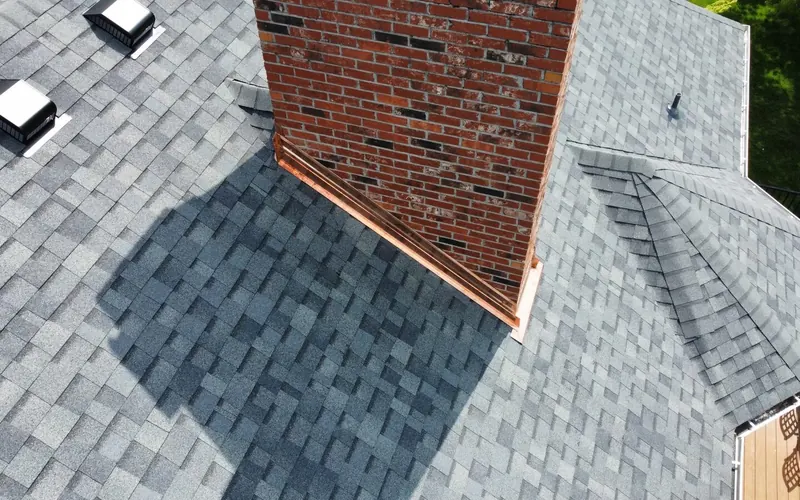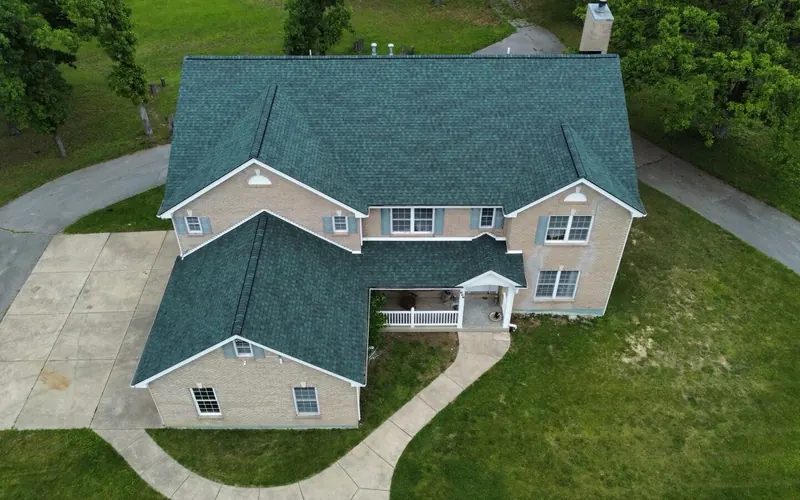
In this guide
- Mild fall temperatures help new shingles seal down properly.
- Getting it done before winter keeps ice, snow and freeze-thaw from finding weak spots.
- Schedules are usually more flexible than during spring storm season.
- Most replacements take one day, so there's still time before the cold sets in.
1. The weather is right for shingles
If your roof is near the end of its life, fall is the moment to act. Asphalt shingles have strips of sealant that bond each row to the one below it. Those strips are activated by the sun's heat, and they seal best on mild, sunny days.
Manufacturers like Owens Corning treat 40°F and below as cold-weather installation. In that range, new shingles may not seal on their own until it warms up, so crews hand-seal them. Fall's mild days give shingles the warmth they need without the extreme summer heat that makes them soft and easy to scuff during installation.
2. Get ahead of winter
Winter is when a tired roof gives out. Water gets into small cracks, freezes, expands and makes them bigger. Snow melts and refreezes along the eaves. A roof that barely made it through summer can start leaking in January, when repairs are harder to schedule and often only a temporary patch until spring.
Every KPro replacement includes ice-and-water shield in the valleys and along the eaves, the two places winter leaks start most often.

3. Schedules are more flexible
Spring storm season is when every roofer in town is booked solid. After a big hailstorm, the phones don't stop. Fall usually means more flexibility to pick a date that works for you, without waiting in a storm backlog.
4. Deal with this year's storm damage now
If hail or wind hit your neighborhood this year, get your roof inspected before winter. Damaged shingles let water in, and winter makes small problems worse. Most insurance policies also require prompt notice of damage, so waiting until spring can work against you. Our guide to roof insurance claims in Missouri explains how it works.
5. It's done in a day
Most St. Louis roof replacements are finished in a single day, start to finish, including cleanup and a magnetic sweep for nails. Larger or steeper roofs occasionally take two. That means there's still time to get it done before the holidays and the first hard freeze. Wondering about cost? See what a new roof costs in St. Louis.
What install day looks like
A full replacement is less disruptive than most people expect. Here's how a typical day goes:
- 1Tear-offThe old shingles come off, down to the wood deck.
- 2Deck checkWe inspect the decking and replace any soft or rotted sections so the new roof has a solid base.
- 3WeatherproofingSynthetic underlayment goes down, with ice-and-water shield in the valleys and along the eaves, plus new drip edge.
- 4Shingles and ventilationNew shingles, matching ridge caps and a ridge vent to keep the attic breathing.
- 5CleanupA magnetic sweep of the yard and driveway for nails, and your written warranty.
Your fall roof checklist
Even if your roof has years left, a few minutes this fall can head off a winter leak:
- Clean gutters and downspouts once the leaves are down
- Look for missing, curled or cracked shingles from the ground
- Check the flashing around chimneys, vents and skylights
- Look in the attic for stains, damp insulation or daylight
- Trim branches that hang over the roof
- Book a roof tune-up ($400–$800) or a free inspection
Book a free inspection now and get a written estimate within 24 hours, with time to spare before winter.
Frequently asked questions
Can you replace a roof in cold weather?
How long does a roof replacement take?
Should I wait until spring to file a storm claim?
What's included in a KPro roof replacement?

Locally owned in Manchester, MO since 2020, serving the St. Louis metro and Quincy, IL. GAF, Owens Corning and CertainTeed certified, Pella Certified, and BBB A+ accredited. Bilingual crew, with a project coordinator on every claim.